
Your Nervous System Is Running Your Team Meetings — Whether You Know It Or Not
Think about the last meeting that went sideways. Maybe it started professionally enough and then — someone said something, a tone shifted, a parent escalated, an administrator pushed back — and suddenly the entire room changed. People shut down. Someone talked over everyone. The plan you came in with dissolved, and you walked out feeling like you survived something instead of led something.
Here is what most professional development will never tell you about that meeting: the content wasn't the problem. The nervous systems in the room were.
What Polyvagal Theory Tells Us About School Teams
Dr. Stephen Porges' Polyvagal Theory, which has become one of the most influential frameworks in understanding human regulation and social behavior, proposes that our autonomic nervous system is constantly and unconsciously scanning the environment for signals of safety or threat — a process he calls neuroception. When it detects threat, our capacity for higher-order thinking, connection, collaboration, and communication narrows significantly. We move into protective states: fight (reactivity, domination, defensiveness), flight (avoidance, withdrawal, disengagement), or freeze (shutdown, compliance without genuine buy-in).
The critical insight for school-based professionals is this: co-regulation — the process by which one person's regulated nervous system helps stabilize another person's dysregulated one — is not only possible between adults and children. It happens between adults, in every meeting, hallway conversation, and difficult phone call. The most regulated person in the room has a profound, neurobiologically real influence on everyone else. And when no one in the room is regulated, the collective capacity of that team to problem-solve, collaborate, and make sound decisions drops dramatically.
A 2024 RAND survey found that 60% of K-12 educators report burnout — and burnout, at its neurological core, is chronic dysregulation. This means the majority of the professionals sitting in your team meetings are operating with compromised nervous systems, limited capacity for nuanced thinking, and a much shorter fuse than their training prepared them to acknowledge. They are not failing to collaborate because they don't care. They are failing to collaborate because their systems are overwhelmed and nobody gave them the tools to address it.
Regulation Is a Leadership Skill
This is the heart of the second pillar of the Unconventional Team Framework: Regulation. Not relaxation. Not stress management. Regulation — the practiced, developed ability to understand your own nervous system well enough to lead from it rather than be led by it.
A regulated school leader can hold space when a parent arrives to an IEP meeting in crisis. A regulated SLP can stay grounded when a team disagrees with her clinical recommendation. A regulated special education teacher can maintain collaborative presence even when she is privately exhausted. This is not superhuman — it is a trained skill. And it begins with the adult doing the internal work first.
The framework asks a straightforward but profound question: if you are the most regulated person in the room, what becomes possible? The answer, backed by neuroscience and lived school experience, is everything. Better collaboration, clearer communication, more equitable decision-making, and — most importantly — a safer environment for the students who depend on every adult in that building to hold it together.
Reflection Questions
When you walk into a high-stakes meeting, what does your nervous system typically do — and do you have a strategy for noticing it in real time?
Who in your school building or on your team tends to be the most regulated person in the room? What does their presence make possible?
Are there specific people, environments, or types of meetings that reliably activate your threat response? What is one thing you could do before those situations to come in more grounded?
If your team's collective regulation level were measured on a scale right now, where would it land — and what is one upstream change that could shift it?
Understanding your nervous system is the most practical professional development you will ever invest in. The Unconventional Team Framework Workbook walks you through this work in a way that is immediately applicable to your real school-based life. Explore it at trevagraves.com
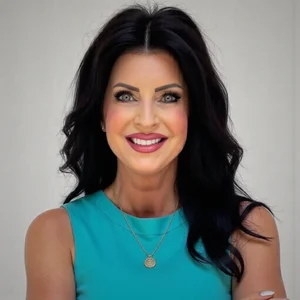
Treva Graves, M.A. CCC-SLP is a 30-year school-based SLP, burnout survivor, certified confidence coach, and creator of the Unconventional Team Framework. She helps SLPs, OTs, PTs, educators, and school leaders do the work before the work — so they can show up grounded, regulated, and ready to lead. Connect with Treva and explore her keynotes, workbook, and community at trevagraves.com.