
What Is the Unconventional Team Framework? A Guide for SLPs, OTs, PTs, and School Leaders
Most professional development starts with skills. This one starts with you — because the research is clear that who you are in the room determines everything that happens inside it.
Why This Framework Exists:
I did not set out to build a framework.
I set out to understand what had happened to me after nearly thirty years as a school-based speech-language pathologist — why someone with that much experience, that much genuine love for the work, could end up sitting in her car every morning unable to open the door. I needed to understand not just what burned out, but what, specifically, had broken down. And I needed to understand it in a way that would tell me what to actually rebuild — not what to add to my already-impossible list of professional responsibilities, not another strategy or system or self-care practice, but the real structural repair.
What I found, through that rebuilding process and through the years of working alongside SLPs, OTs, PTs, educators, and school leaders that followed, was this: the professionals who struggle most in school settings are not struggling because they lack competence. They are struggling because something upstream of their competence has quietly collapsed. Their sense of professional identity has eroded. Their nervous systems are chronically dysregulated. Their voices have been silenced or sidelined for so long that they no longer trust what they have to say. And their confidence — the deep, grounded kind, not the performed kind — has been replaced by an exhausting daily performance of having it together.
None of that is fixed by better strategies. None of it is fixed by another PD day. It is fixed by doing the work before the work — the internal work that determines whether any external strategy will hold.
That is what the Unconventional Team Framework was built to do.
What Makes This Framework Unconventional:
Traditional professional development in schools operates on a specific assumption: that the professional is fundamentally intact and simply needs better tools, better systems, or better information. The PD gives her the tools. She returns to the building. The building is still the same building. And within weeks, the new tools have been absorbed into the same broken system and the same depleted professional is carrying them.
The Unconventional Team Framework operates on a different assumption entirely: that the most important work a school professional can do is internal, that it must happen before the external work will hold, and that doing it in isolation is neither sustainable nor necessary.
This is why the framework is sequenced the way it is. Each of the four pillars — Identity, Regulation, Communication, and Confidence — builds on the one before it. The sequence is not arbitrary. It reflects both the neuroscience of how humans function under chronic stress and the lived reality of what breaks down first and what must be restored in what order.
You cannot regulate your way out of an identity crisis. You cannot communicate authentically from a dysregulated nervous system. You cannot build durable confidence without the first three pillars in place. The order is the framework. And the framework is the work before the work.
Pillar One — Identity:
Who are you in this work? Not what do you do — who are you?
Professional identity is the internal answer to that question. It is the stable, integrated sense of self that a professional carries into every room she enters — the clarity about her values, her expertise, her purpose, and her place on the team. It is not a title or a credential. It is something closer to a compass. When it is intact, it orients everything. When it has eroded, the disorientation is total — even when it is invisible to everyone around you.
A 2022 scoping review published in PMC examined professional identity research across 17 health professions and found that professional identity is not a fixed trait acquired at graduation. It is a dynamic, ongoing formation process shaped by workplace experiences, relational dynamics, organizational culture, and the degree to which a professional's values and actual practice remain aligned. When that alignment breaks down — when what you are being asked to do consistently contradicts why you became an SLP or an OT or an educator in the first place — identity erosion begins.
A 2025 study published in Academic Medicine found that professionals with stronger professional identity reported significantly lower burnout and fewer mental health concerns. Research published in Taylor and Francis on burnout and professional identity among allied health educators found that a strong professional identity served as a direct buffer against burnout, sustained by a sense of passion, reflective practice, and alignment between values and work. The research across disciplines is consistent: professional identity is not soft. It is structural. It determines resilience. It determines sustainability. It determines whether a professional can show up in the work she chose for reasons that still make sense to her.
The Identity pillar of the Unconventional Team Framework asks every professional to do three things. First, to name what she actually values — not what the district values, not what the IEP form requires, but what she came into this work believing mattered. Second, to identify where her current practice is and is not aligned with those values, honestly and without self-blame. Third, to begin the deliberate process of returning herself to the center of her own professional story — not as an act of selfishness, but as the foundational act of sustainable leadership.
You cannot lead from a place you have vacated. Identity is how you find your way back.
Pillar Two — Regulation:
You cannot think your way out of a state your body put you in.
This is the sentence that changes everything for most of the professionals I work with. Because the assumption underneath most professional development is that better thinking produces better outcomes. And it does — when the nervous system running the thinking is stable enough to support it.
Stephen Porges' Polyvagal Theory, one of the most significant contributions to neuroscience in the last three decades, provides the foundational explanation for why this matters in professional settings. Porges' theory describes three distinct states of the autonomic nervous system: a ventral vagal state of safety and social engagement, in which humans are capable of creative thinking, collaborative communication, nuanced decision-making, and genuine connection; a sympathetic state of mobilization, characterized by the fight-or-flight response, in which the system is prepared for threat rather than collaboration; and a dorsal vagal state of shutdown, in which the system has moved into collapse and disconnection as a last-resort protective response.
The critical insight for school professionals is this: a nervous system in a sympathetic or dorsal vagal state cannot access the capacities that effective professional practice requires. It cannot think flexibly in an IEP meeting. It cannot hold a parent's grief and a data set at the same time. It cannot hear feedback without experiencing it as threat. It cannot collaborate genuinely with a team it does not feel safe enough to be honest with. And it cannot regulate a classroom, a therapy room, or a student who is in distress — because co-regulation, the process by which one nervous system helps stabilize another, only works when the regulating nervous system is itself stable.
Research published in PMC on autonomic dysregulation and burnout found direct evidence of reduced vagal function in burned-out professionals — meaning that the nervous system's capacity for self-regulation is itself damaged by chronic occupational stress. A review published in Neuroscience and Biobehavioral Reviews confirmed that workplace stressors are associated with significant decreases in the neural vagal control that governs emotional regulation, social engagement, and adaptive response to challenge.
The research points to the same conclusion that the ASCD article "Dysregulated Students Need Regulated Adults" made explicit for educators: the single most powerful regulatory resource available to the students and teams in a school building is a regulated adult. Not a perfectly calm adult. Not an adult who never struggles. A regulated adult — one who has developed the skills to notice when she has been pulled out of her window of tolerance and bring herself back.
The Regulation pillar of the Unconventional Team Framework is not about meditation or bubble baths. It is about the deliberate development of regulation as a professional skill — specific, repeatable, context-relevant tools that a school professional can deploy before a difficult conversation, during an IEP meeting that is going sideways, or in the moment between a hallway encounter and a therapy session. It is about building the physiological foundation that makes every other professional capacity possible.
Regulation is not self-care. It is professional infrastructure.
Pillar Three — Communication:
The meeting after the meeting is where the real communication happens. The framework asks: what would it take to bring that conversation into the room?
Most communication training in professional settings assumes a skills deficit. If the team is not collaborating effectively, someone needs to learn active listening, or give better feedback, or run a more structured meeting. The training addresses the surface behavior while leaving the underlying condition entirely intact.
The underlying condition — the one that determines whether any communication skill will actually function in a real school setting — is psychological safety. Defined by Harvard Business School professor Amy Edmondson as "a shared belief that the team is safe for interpersonal risk-taking," psychological safety is the precondition for genuine communication. Without it, professionals use their communication skills to perform collaboration rather than engage in it. They say what is expected rather than what is true. They agree in the meeting and debrief honestly in the parking lot.
Google's Project Aristotle, the landmark study that analyzed 180 teams to identify what made them effective, found that psychological safety was the single strongest predictor of team performance — more predictive than individual talent, complementary skills, or any other variable they measured. A 2025 review published in PMC on psychological safety in interdisciplinary teams found that it is directly shaped by leadership behavior — specifically whether leaders model vulnerability, respond to mistakes with curiosity rather than blame, and actively create conditions in which every voice is genuinely invited.
A 2025 ASHA systematic review on SLP-teacher collaboration in mainstream schools found that while SLPs broadly value collaboration, meaningful engagement is far less consistent. The barriers were not primarily logistical. They were relational — role misunderstanding, unequal professional status, and a professional culture that does not reliably make it safe to say what needs to be said.
The Communication pillar of the Unconventional Team Framework addresses this at the level where it actually lives — in the individual professional and in the culture she helps create. It begins with the recognition that a professional who has done the identity work knows what she values enough to say it. A professional who has done the regulation work is physiologically stable enough to say it without shutting down or escalating. Those two pillars are prerequisites, not optional supplements.
From that foundation, the Communication pillar builds the specific capacities that genuine school team collaboration requires: the ability to advocate for students and for oneself from a place of clarity rather than desperation, the ability to navigate disagreement without either capitulating or escalating, and the ability to create conditions on a team where other professionals feel safe enough to bring their full voice into the room.
Communication at this level is not a soft skill. It is the visible expression of everything the first two pillars built underneath it. And when it is functioning, it transforms not just individual professional relationships but the entire culture of the team.
Pillar Four — Confidence:
Confidence is the result of the work — not the requirement for beginning it.
This is the pillar that gets the most attention and the most misunderstanding. We talk about confidence as though it is something a professional either has or doesn't have — a personality trait, a gift, something that some people were born with and others spend their careers quietly pretending to possess.
The research says something entirely different. Albert Bandura's foundational work on self-efficacy — the construct that most closely maps to what we experience as professional confidence — established definitively that self-efficacy is a belief system built through specific, repeated experiences. It is constructed from four sources: mastery experiences, in which a professional does the work and registers it as successful; vicarious modeling, in which she sees people like her succeed in similar conditions; social persuasion, in which credible others affirm her capacity; and physiological states, in which her body registers the experience of doing the work as safe rather than threatening.
Notice that none of those sources is a mindset shift. All of them are experiential, embodied, and relational. Confidence is built in the living of specific kinds of experience, registered through a nervous system that is stable enough to actually receive them. Which is why the Regulation pillar comes before the Confidence pillar — because a dysregulated nervous system filters out evidence of competence and amplifies evidence of failure. It cannot build the internal evidence file that confidence requires.
The Confidence pillar of the Unconventional Team Framework addresses both the structural and the behavioral dimensions of professional confidence. Structurally, it works on the relationship between identity and self-trust — the understanding that durable confidence is rooted in who you are rather than in what you produce. Behaviorally, it addresses the specific patterns that undermine confidence in high-achieving professionals: perfectionism, the imposter experience, the compulsive over-working that mistakes more effort for more worth, and the performance of confidence that exhausts the professional while never actually addressing what it is covering.
This pillar is where the work of the framework becomes visible to the people around you. It is where the SLP who has rebuilt her sense of professional identity, stabilized her nervous system, and reclaimed her voice begins to show up in meetings differently. Not louder. Not more aggressive. More grounded. More clear. More genuinely herself in the work she chose.
That is the confidence the framework builds. Not the kind that has to be performed. The kind that holds.
Who the Framework Is For:
The Unconventional Team Framework was built for school-based professionals across disciplines — because the internal breakdown that leads to burnout, silenced voices, and fragmented teams does not belong exclusively to any one credential or role.
It is for speech-language pathologists who entered the field with a clear sense of clinical purpose and have watched that purpose get buried under caseloads, documentation requirements, and the constant pressure to do more with less — and who are ready to stop surviving and start leading from clarity again.
It is for occupational therapists and physical therapists who serve on school teams alongside SLPs and educators, navigate the same systemic pressures with the same invisible workload, and deserve the same grounded internal foundation that makes collaboration genuine rather than performed.
It is for classroom teachers and special educators who are the most regulated — or most dysregulated — presence in the room for their students every single day, and who are increasingly being asked to support the social-emotional and behavioral needs of those students without being given the internal resources to do it sustainably.
It is for school leaders and administrators who understand that the quality of outcomes in their buildings is inseparable from the internal state of the professionals inside them — and who are ready to invest in professional development that addresses the whole professional rather than just the competency checklist.
And it is for university faculty and graduate program directors who are forming the next generation of school-based professionals and understand that professional identity development must begin in preparation programs, not be left to the randomness of early career experience. Graduate students find this framework valuable to their development of their own internal capacity.
The framework speaks across disciplines because the internal experience it addresses — the erosion of identity, the dysregulation of the nervous system, the silencing of the professional voice, the collapse of grounded confidence — is a shared human experience that the school building context makes particularly acute. The specific examples change by role. The underlying structure does not.
How the Framework Is Delivered:
The Unconventional Team Framework is not a workshop you attend once and file away. It is a body of work designed to meet professionals at different stages of readiness and deliver the internal development that sustainable professional practice requires.
The Unconventional Team Framework Workbook is the foundational resource — a 15-chapter, self-directed workbook that walks a professional through all four pillars with structured reflection, the Unconventional Team Compass, role-specific goal templates, 11 practical worksheets, two case studies, daily regulation rituals, and a four-to-six week implementation roadmap. It is the most complete individual resource available for doing the work before the work. From $37.99.
The Work Before the Work Webinar is a 60-minute intensive that introduces the framework, the research behind it, and the specific application of regulation-first leadership for school professionals. It includes a digital workbook and is the clearest entry point for a professional new to this work. $67.99.
The Regulate to Lead Reset Kit is a targeted Regulation pillar tool — a real-time reset system built for the highest-stakes moments in a school professional's day: the IEP meeting that is going sideways, the conversation with an administrator that triggers the imposter, the transition between a difficult session and the next one. Includes one-minute and five-minute regulation resets, communication scripts, imposter thought reframes, and a printable reference card. $17.99.
The Confidence Behind the Competence is a free Confidence pillar assessment built on Dr. Valerie Young's five competence types. It is the clearest starting point for a professional who wants to understand where her self-doubt is most active and what to do about it. Free.
Self-Doubt Detox is the book — a five-step B.L.O.O.M. methodology for dismantling the architecture of self-doubt and rebuilding professional confidence from the inside out. Written for high-achieving professionals who are tired of performing having-it-together and ready to actually feel it. $17.99.
The Unconventional Collective is the community — a membership for SLPs, OTs, PTs, educators, and school leaders doing this work together rather than in isolation. Includes bi-weekly live office hours, monthly Idea Exchanges, and an ongoing library of framework-aligned training resources. $29/month.
For schools, districts, and graduate programs ready to bring this work to an entire team or cohort, keynotes, professional development workshops, and university partnerships are available. The Unconventional Team Framework translates directly to full-day PD, multi-session workshop series, and keynote presentations built around the specific needs of your team.
The Premise Underneath Everything:
There is a question that started all of this. I asked it at the lowest point of my burnout, sitting in my car in a school parking lot, trying to locate the version of me that had once loved this work without excavating through layers of exhaustion to find her.
What if we started with the adult in the room first?
Not the students. Not the IEP. Not the data. Not the compliance deadline. The adult. The human being who walks into that building carrying thirty years of training and genuine love for this work and an invisible weight that no one has ever helped her put down.
What if she went first?
That question became the Unconventional Team Framework. Every resource connected to it — the workbook, the book, the community, the keynotes, the university partnerships — is an answer to that question. Not because the students don't matter. Because they matter so much that the adults serving them deserve to show up whole.
The work before the work is not a detour from the mission. It is the mission. It is how sustainable, effective, genuinely collaborative school teams are built. Not from the outside in, with better systems imposed on depleted professionals — but from the inside out, with grounded, regulated, confident professionals who know who they are in the work and lead from that place every single day.
That is what the Unconventional Team Framework is. That is what it is for. And that is why it works.
Start Here:
$17.99: The Regulate to Lead Reset Kit
$17.99: Self-Doubt Detox
From $37.99: The Unconventional Team Framework Workbook
$67.99: The Work Before the Work Webinar
$29/month: The Unconventional Collective
Teams and districts: Book a Clarity Call
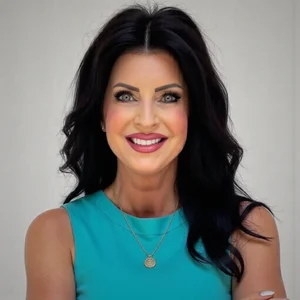
Treva Graves, M.A. CCC-SLP, is the founder of The Unconventional SLP and creator of the Unconventional Team Framework. After nearly 30 years in school-based practice, she helps SLPs, OTs, PTs, educators, and school leaders do the work before the work so they can show up grounded, regulated, and ready to lead.